
Bramble makes maps for country estates: hundreds of acres, walled gardens, follies half-hidden in the trees. So it raised an eyebrow or two when we offered to make one for our village's first jumble trail.
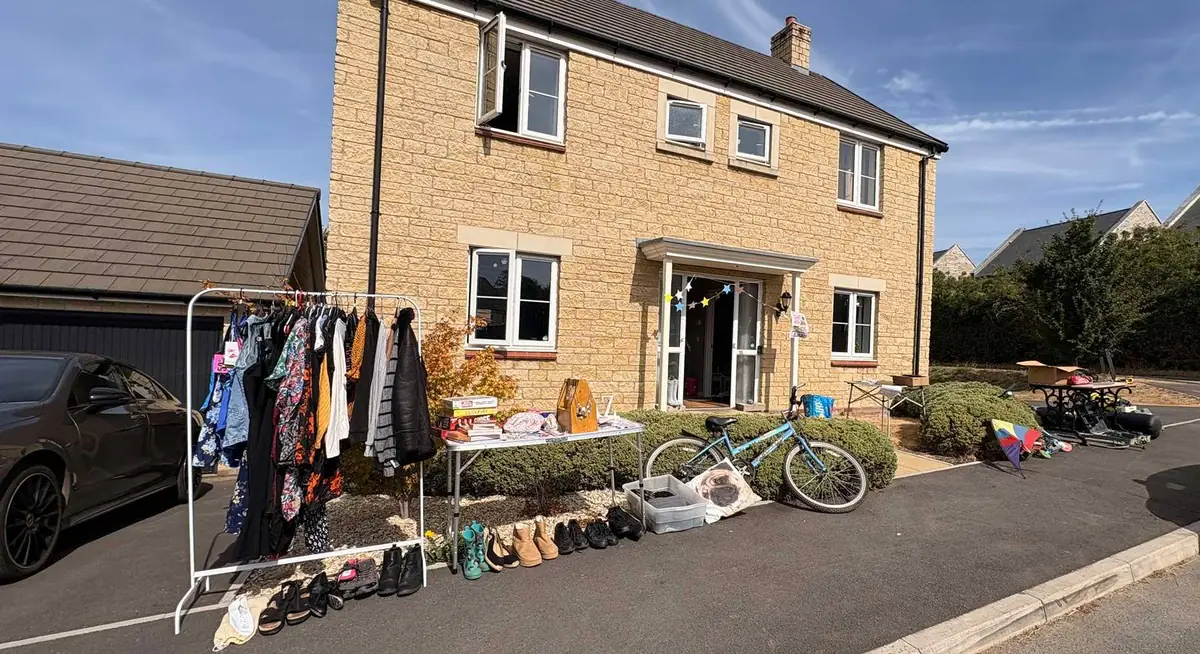
If you have not been to one, a jumble trail is a car boot sale turned inside out and scattered across a whole town. Dozens of households drag a table onto the front wall or the driveway and sell whatever they no longer need. You wander the streets, house to house, and never quite know what is round the next corner.
That is the charm of it, and also the catch. It is a treasure hunt by design, and it has the same flaw as every treasure hunt: you cannot see the next stall from the last one. It is easy to stick to the main streets you already know, and easy for a whole lane to go unvisited. The table at the end of the quiet cul-de-sac is the hardest to find and the easiest to walk past, however good it is.
We know this problem. It is the same one we solve for a fifty-acre estate, just measured in streets instead of acres. People underexplore. The curiosity is there. What is missing is a sense of what is where, and the confidence to go and find it.
So we made a map, and then handed over the keys
Every participating house became a spot on it, with a line about what was on the table. No app, no printed guide, just a code to scan on your own phone. A dot showed you where you were standing.
The part we did not expect is that we barely touched it. The organiser put the whole trail in herself, on the evening of 27 July: twenty-four households and two waypoints, nearly all in one sitting, with one more house added the next evening. We built the thing. She made it a map of somewhere.
The day
The trail ran on Sunday 2 August.
234 map opens by 182 people
98% of them on a phone
59% arrived with no referrer
39% came from the Facebook post
Nearly everyone was on a phone, which is what you would hope for something meant to be used while walking. But the figure that pleased us most is the dullest one on that list. A visit with no referrer is the signature of someone scanning a printed code in the street, standing in front of a house, rather than tapping a link on the sofa. Three in five arrived that way. The map was being used on the day, outdoors, by people mid-trail.
Everyone liked it.
That is the entire review, and we are not going to dress it up into something more quotable.
What we got wrong
Mid-event, the organiser wanted to correct something and found the list of stops in the portal unusable on her phone. She did not tell us. She worked around it, by creating a second pin for a house that already had one, and carried on running her day.
We found it twenty days later, by going and looking at the data rather than waiting to be asked. There is a Help button in the portal that emails us directly. She never pressed it, and that is not her fault. She was in the middle of an event, and the fix available to her was the one she could do herself.
Two things changed because of it. Houses in a terrace no longer stack on top of each other on the map, which is what made the list hard to work with in the first place. And we now look at a customer's map after their first event instead of waiting for a complaint, because the only real operator failure we have ever had was a silent one.
A town-sized estate
A jumble trail is scattered points and a wanderer who wants to explore but needs to know which way to walk. That is a fifty-acre garden with roads through it. The job is the same at both ends: turn "I did not know that was down there" into "let me go and look."
We build Bramble for estates, gardens and hotels, and that is who pays for it. But the software did not mind being pointed at a village for an afternoon, and neither did we. If the trail runs again next summer, the offer stands.