
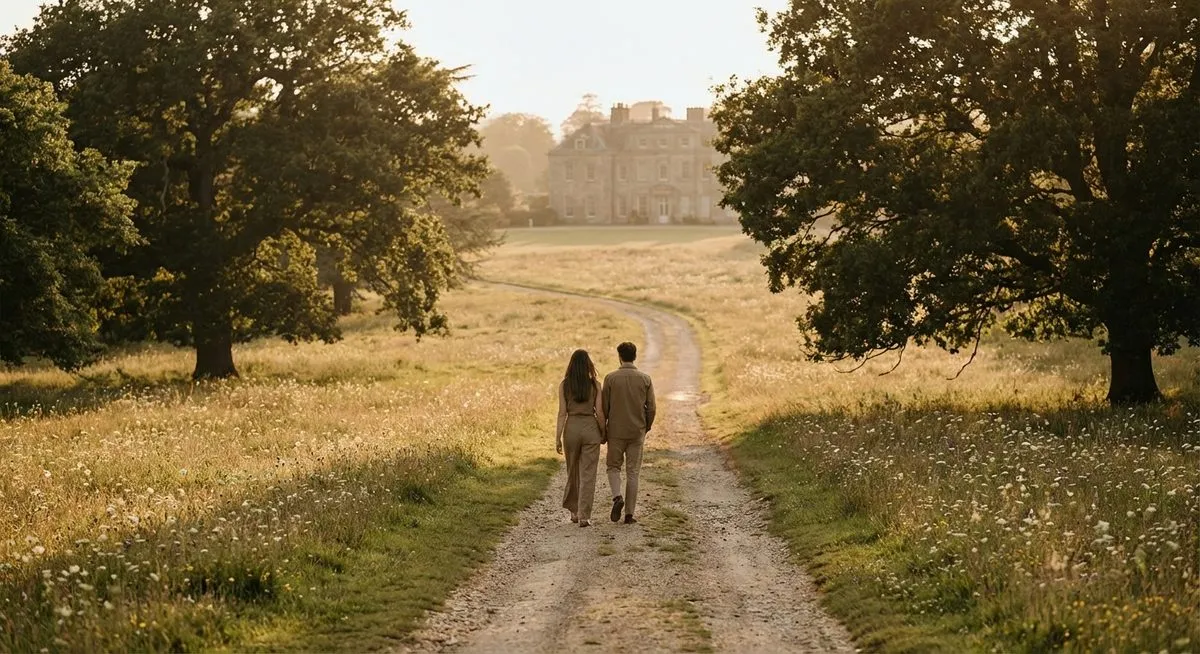
Every property with grounds worth exploring faces the same question: should guests be led around by a guide, or given the tools to discover things for themselves? The answer, increasingly, is both. But the balance is shifting.
More luxury estates, country hotels, and historic gardens are investing in self-guided experiences. The guided tour has not changed; the guest has. People want the grounds at their own pace, on their own schedule, without waiting for a group to assemble at 11am.
The Case for Guided Tours
Guided tours have clear strengths. A knowledgeable guide can read the room, adapt to questions, share anecdotes that are not written down anywhere, and bring a place to life through personality and expertise.
For certain contexts, guided tours remain the best option:
- Complex histories that benefit from a storyteller who can weave threads together
- Safety-sensitive areas where visitors need supervision
- Large group visits where structure keeps things running smoothly
- Premium experiences where a personal host is part of the offering
The challenge is scale. A guided tour requires a guide. Guides need to be trained, scheduled, and paid. When a property has 50 guests on a Saturday afternoon, not all of them can have a personal guide. Most will explore on their own, with nothing more than a paper map and a vague suggestion from reception.
The Case for Self-Guided Experiences
Self-guided does not mean unguided. It means the guidance is built into the experience rather than delivered by a person.
A well-designed self-guided experience gives guests:
- Freedom of schedule. Explore at 7am or 7pm. No waiting for a tour slot.
- Freedom of pace. Spend 20 minutes at the walled garden or walk straight past it. The guest decides.
- Freedom of route. No fixed path. Every visit can be different.
- Privacy. No strangers in the group. Particularly valued by guests at luxury properties.
Watch how people actually move through a property that is open to visitors and the pattern is hard to miss: given the choice, most would rather explore on their own than wait for a scheduled tour. Autonomy is the draw. They want to set their own pace, linger where they like, and skip what does not interest them.
Comparing the Two Approaches
| Guided Tour | Self-Guided Experience | |
|---|---|---|
| Availability | Scheduled times only | Any time, always on |
| Capacity | Limited by guide availability | Unlimited |
| Cost to property | Ongoing staff costs | One-time setup |
| Personalisation | Guide adapts in real time | Guest chooses their own path |
| Consistency | Varies by guide | Same quality every time |
| Guest privacy | Shared with group | Completely private |
| Depth of content | Depends on guide knowledge | As rich as you make it |
| Languages | Limited by guide skills | Easily multilingual |
| Seasonal updates | Requires retraining | Update content instantly |
The Technology Gap
Until recently, "self-guided" meant a paper map and perhaps a few information boards. The experience was functional but flat. A guest might find the lake, but they would not learn that kingfishers nest in the far bank or that the lake was created in 1760 by damming a stream.
Digital story maps have changed this. Using GPS and the guest's own phone, a story map can deliver the right content at the right place at the right time. No app to download. No audio guide to collect and return. Just a QR code, a mobile browser, and a landscape full of stories.
This means self-guided no longer has to mean "lesser." The content can be just as rich, just as detailed, and just as engaging as anything a guide would deliver. In some ways more so, because the guest can revisit a story, listen to audio narration, or look at historical photographs at their own pace.
The Best of Both
The smartest properties are not choosing one or the other. They offer guided tours for guests who want them, and a self-guided story map for everyone else.
This means every guest gets an experience. The couple who arrive at 4pm and want a quiet walk before dinner. The family with children who will not stand still for a 45-minute tour. The returning guest who wants to discover something new on their third visit.
A guided tour serves a group at a scheduled time. A self-guided story map serves every guest, every day, from the moment they arrive until the moment they leave.
Making Self-Guided Work
The key to a good self-guided experience is quality of content. A pin on a map is not enough. Each point of interest needs a story worth stopping for.
The best self-guided experiences share three qualities:
- Stories, not information. "This is the walled garden, built in 1867" is information. "Through this weathered oak door, time runs differently" is a story. Guests remember stories.
- Respect for the guest's time. Keep each story focused. Say something worth saying, then let the guest move on.
- A sense of discovery. The experience should feel like finding something, not being told something. The best story maps make guests feel like they have uncovered the secrets of a place themselves.