
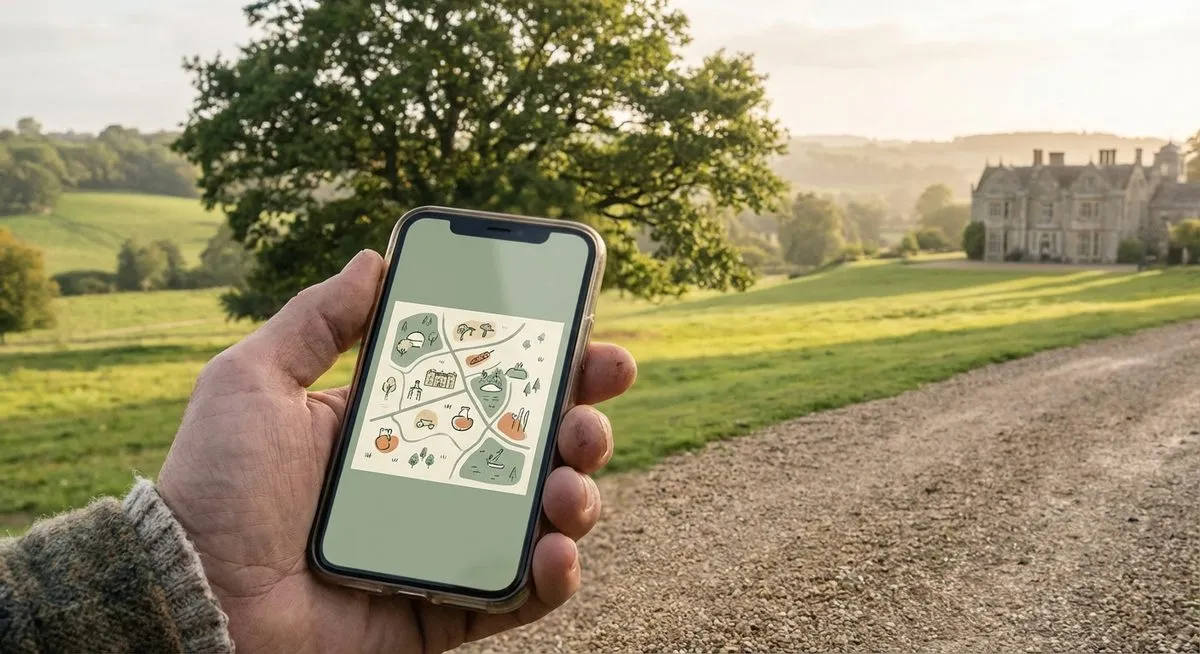
A story map is an interactive, GPS-powered digital map that reveals stories, history, and points of interest as people physically walk through a place. Instead of reading a printed guide or following a tour leader, visitors explore at their own pace while the landscape itself tells its story.
For country estates, hotels, and historic gardens, a story map turns the grounds into a self-guided experience. Guests open the map on their phone, and as they walk, content appears at each point of interest: the history of a building, the ecology of a woodland, the story behind a walled garden gate.
How a Story Map Works
From the guest's side, there is nothing to it. No app to download. A guest scans a QR code at reception or taps a link on the guest WiFi portal, and the story map opens in their mobile browser.
The map shows the estate's grounds with marked points of interest. A blue dot shows the guest's current location using their phone's GPS. As they walk towards a marker, they can tap it to reveal the story for that spot.
Each story can include:
- Written narratives about history, nature, or local lore
- Photography of the location across seasons
- Audio narration that guests can listen to while they walk
- Seasonal notes that change throughout the year
The key difference from a traditional audio guide or printed map is that the content is location-aware. The map knows where the guest is and reveals the right story at the right moment. There is no rewinding, no "turn to page 7," no rigid route to follow.
Why Estates Are Moving Away from Paper Maps
Most estates and country hotels still hand guests a printed map or a laminated sheet at reception. It works, but it has real limitations.
Paper maps are static. They cannot tell a story. They cannot adapt to the seasons. They cannot show a guest where they are when they have wandered off the main path. And they end up in bins, pockets, and car footwells.
A story map solves each of these problems:
- Always current. Update content at any time without reprinting.
- Seasonal flexibility. Swap in spring wildflower routes, autumn colour walks, or winter wildlife trails.
- Richer information. Photos, audio, and written stories give guests far more than a dot on a page.
- GPS positioning. Guests always know where they are, even on a 500-acre estate.
- No waste. Nothing to print, nothing to throw away.
Who Uses Story Maps?
Story maps are particularly well suited to properties where the grounds are part of the guest experience. The most common users include:
- Country estates and hotels with extensive grounds, parkland, and walking routes
- Historic gardens and houses open to visitors, where there is history at every turn
- Vineyards and farm estates where visitors want to understand the land, the seasons, and the craft behind the produce
Any property where guests wander the grounds and there are stories worth telling is a strong fit.
Story Maps vs Other Options
Story maps vs printed maps
Printed maps show locations. Story maps reveal stories. A printed map tells a guest "the walled garden is here." A story map waits until they arrive at the garden gate and then tells them that this oak door has been opened by generations of gardeners since 1867, and that the brick walls inside grow peaches and figs.
Story maps vs audio guide apps
Traditional audio guides require downloading an app, often cost extra, and follow a fixed sequence, and most visitors never take one up. The friction is too high. Story maps work in the browser with no download, are included in the guest experience, and let visitors choose their own path.
Story maps vs guided tours
Guided tours are brilliant for groups who want structure and a knowledgeable host. Story maps serve the guests who prefer to explore independently, at their own pace, on their own schedule. Many properties offer both.
How a Story Map is Created
Creating a story map is a collaborative process between the property and the map maker. At Bramble, the process follows three steps:
- Walk the grounds. We explore the estate together and pick out the places worth a story. Some are obvious, like the ancient oak. Others only you know about.
- Shape the stories. The property shares the history, folklore, and details that guests should discover. These are turned into rich, layered stories with photography, text, and audio.
- Launch. A QR code is placed at reception. Guests scan it and explore. Stories appear as they arrive at each spot.
The property retains full control over the content. Stories can be updated, added, or removed at any time. Seasonal routes can be activated and deactivated as the grounds change through the year.
The Guest Experience
From the guest's perspective, a story map feels effortless. There is nothing to install. They scan a code, see a beautiful map of the grounds, and start walking.
The experience is personal and unhurried. Two guests can visit the same estate and have completely different journeys depending on which paths they take and which stories they stop to read or listen to.
A well-made story map does not replace the experience of being somewhere. It deepens it. The best ones disappear into the background, surfacing just enough at each spot to make a guest pause, look closer, and appreciate something they would have walked straight past.
Getting Started
If your property has grounds that guests explore, a story map could be a valuable addition to the experience. The best way to understand what one looks and feels like is to try a demo.
Bramble offers a free interactive demo of a fictional estate called Thornfield Hall. You can explore it on your phone to experience exactly how a guest would interact with a story map.