
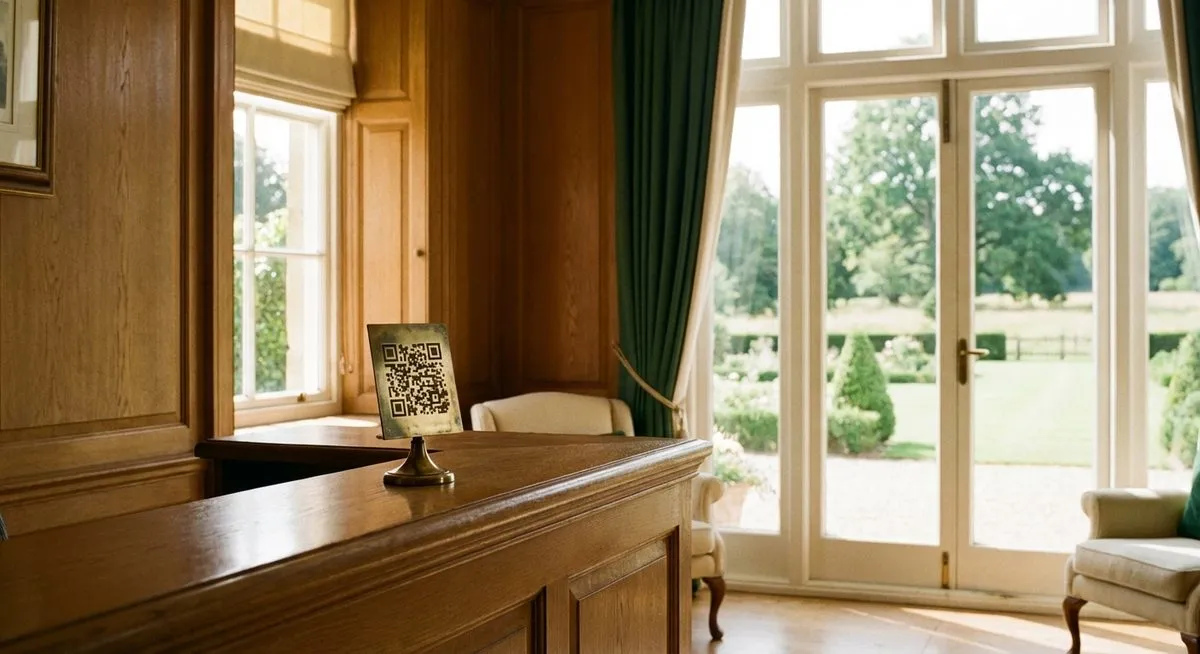
Country hotels do not compete on rooms alone. Luxury travellers increasingly prioritise experience over amenities, valuing what they can do far more than the square footage of the room. The reason a guest books a hushed country manor over a motorway chain hotel is not thread count. It is the experience. The grounds, the setting, the feeling that they have escaped to somewhere with a story.
And yet, when that guest arrives and wants to explore, most properties hand them a folded piece of paper.
In 2026, when guests navigate cities with live maps, order taxis with a tap, and check into flights from their phone, a static paper map feels like a gap in an otherwise polished experience.
The Grounds Are Your Competitive Advantage
Every country hotel has rooms, a restaurant, and a spa. These are expected. What sets one property apart from another is often the land itself. The parkland, the gardens, the woodland walks, the lake, the kitchen garden, the views.
But grounds only become an advantage if guests actually explore them. And most do not. They walk to the nearest viewpoint, take a photograph, and return to the bar. The grounds are interesting; nobody has told them what to look for.
An interactive guest map changes this. It gives guests a reason to walk further, stay longer, and discover things they would have missed. The ancient tree with a story. The folly hidden behind the hedge. The spot where the sunset is best in autumn.
What Guests Expect in 2026
Guests bring the same phone habits into your grounds that they use everywhere else:
- Instant access. Guests do not want to download an app for a two-night stay. They want to scan a QR code and be exploring within seconds.
- Quality design. If a hotel invests in beautiful interiors, the digital touchpoints should match. A clunky map with stock icons feels out of place at a luxury property.
- Relevant content. Generic information is ignored. Guests engage with stories that feel specific, personal, and connected to the place they are standing.
- Independence. Modern travellers, especially at the luxury end, prefer to explore on their own terms. They want tools, not tours.
What an Interactive Guest Map Actually Does
An interactive guest map is not a digital version of a paper map. It is a fundamentally different experience.
When a guest opens an interactive story map on their phone:
- They see a beautiful map of the grounds with marked points of interest.
- A blue dot shows their live GPS position.
- As they walk, they can tap markers to reveal stories about each location.
- Each story includes written content, photographs, and optional audio narration.
The guest chooses their own path. There is no fixed route, no schedule, no group to join. They wander freely and the landscape reveals itself as they go.
The Business Case
Beyond the guest experience, interactive maps create tangible value for the property:
Guests spend more time on the grounds
When there is something to discover, guests walk further and stay outdoors longer. This increases the perceived value of their stay without any additional operational cost.
Stronger reviews and social sharing
Guests who discover hidden features of a property mention them in reviews. "We found the most beautiful walled garden thanks to the map" is the kind of specific, authentic detail that influences future bookings.
Reduced pressure on staff
Front desk teams spend significant time answering questions about the grounds. Where are the walking paths? How do I get to the lake? What is that building? An interactive map answers these questions before they are asked.
Seasonal flexibility
A printed map is static. A digital map can highlight bluebell walks in April, swimming spots in July, mushroom foraging paths in October, and cosy fireside routes in December. The same grounds feel different with every visit.
A differentiator in a crowded market
The UK country hotel market is competitive. Properties that offer something beyond the standard room-restaurant-spa package stand out. An interactive story map is unexpected, memorable, and genuinely useful.
Who Is Already Doing This?
The concept is well established in the heritage and visitor attraction sector. The National Trust, English Heritage, and major botanic gardens have used digital guides and interactive maps for years.
What is newer is the application to private estates and country hotels, where the grounds are part of a guest stay rather than a ticketed visit. These properties have stories just as rich as any heritage site, but they have traditionally relied on paper maps or word of mouth.
The technology has now reached a point where a bespoke, beautifully designed interactive map is accessible to independent properties as well as large institutions with six-figure technology budgets.
Getting Started
If you manage a country hotel or estate and want to explore what an interactive guest map could look like for your property, the process is straightforward:
- Walk your grounds with fresh eyes. Where are the stories? What do guests ask about? What do they miss?
- Give each pin a story as well as a name. A pin that says "Lake" is a map. A pin that tells the story of how the lake was created in 1760 is an experience.
- Start small. Six to ten well-crafted stories are better than thirty thin ones. You can always add more.
Your grounds already have the stories. The question is whether your guests can find them.