
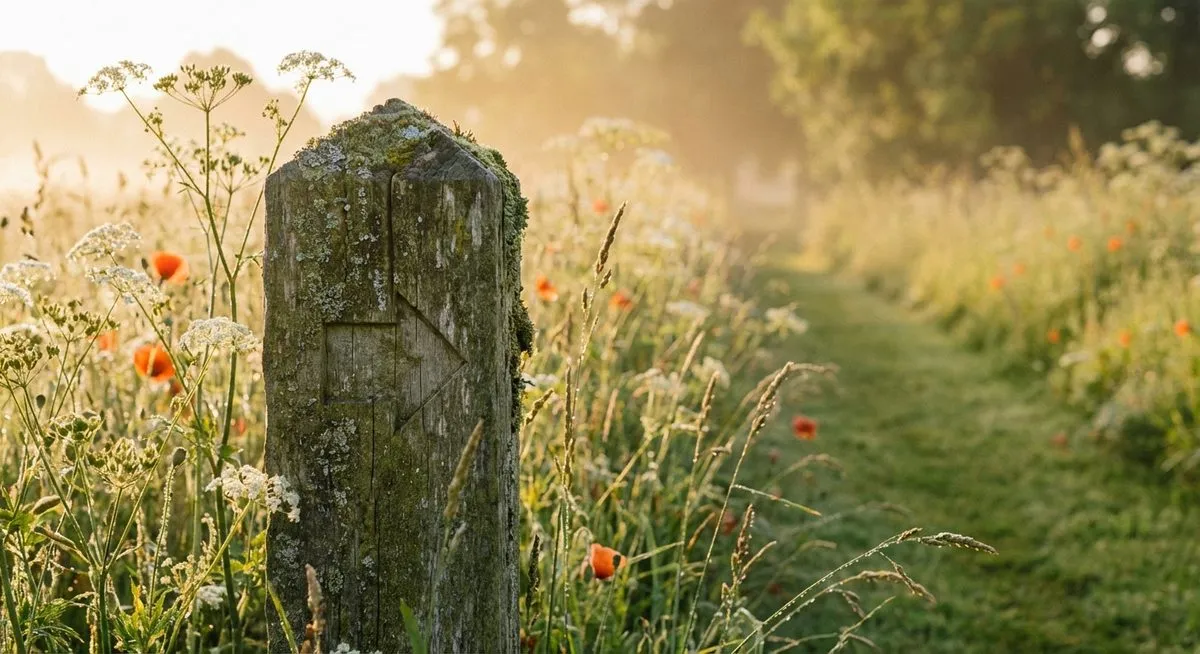
The best estate maps are not the ones with the most points of interest. They are the ones where every stop feels worth the walk. Choosing which spots to include, and which to leave out, is the difference between a map that guests use once and one that shapes how they remember your place.
Here is what we have found works best when it comes to picking the right spots.
Start With the Walk, Not the List
It is tempting to start by listing everything interesting about your grounds. The folly. The lake. The walled garden. The ancient oak. The view from the ridge. The herb garden. The ice house. The chapel. Before long you have twenty spots, and a map that feels cluttered.
Instead, start by walking. Walk the grounds the way a guest would: arriving at reception, stepping outside, choosing a direction. Notice where you naturally pause. Notice the moments where a story would enrich what you are seeing. Those pauses are your points of interest.
The right number for most estates is between 8 and 15 spots. Enough to fill a 60-to-90-minute walk, few enough that each one feels curated rather than exhaustive.
The Three Questions
For each potential spot, ask three things:
1. Would a guest stop here without a story?
Some spots are naturally magnetic. A beautiful view, a striking building, a garden in full bloom. These are worth including because guests will find them anyway. Your story adds depth to something they are already appreciating.
2. Would a guest walk past without a story?
These are often the most powerful spots on a map. The grassy mound that is actually a medieval fishpond. The plain stone wall that marks the original boundary of the estate. The tree that was planted to celebrate a birth two centuries ago. Without a story, these are invisible. With one, they become highlights.
3. Is the story actually interesting?
Not every fact makes a good story. "This bridge was built in 1842" is a fact. "This bridge was built by the estate's third owner after his horse refused to ford the stream. He named it Patience Bridge, and the stream has been called Patience Brook ever since" is a story. If you cannot find a genuine story, the spot probably does not belong on the map.
The best points of interest are the ones where the story changes how the guest sees what is in front of them. Where the landscape shifts from scenery to something with meaning.
Spots That Always Work
Across dozens of estates, certain types of spots consistently engage guests:
- Boundary markers and transitions. Gates, walls, ha-has, the moments where one landscape gives way to another. Guests notice these thresholds naturally, and the stories behind them are almost always rich.
- Ancient trees. A tree that has been standing for 300 years carries an implicit story. Guests do not need a plaque and a Latin name; they need to know who planted it, what it has survived, and what lives in it now. Make that story explicit and they remember it.
- Water features. Lakes, streams, wells, fountains. Water draws people towards it. A story at the water's edge gives them a reason to linger.
- Working landscapes. Kitchen gardens, orchards, vineyards, farmland. Guests are genuinely curious about what grows here and why. The craft behind the produce is endlessly interesting.
- Follies and surprises. Anything unexpected: a grotto, a hidden garden, a ruin in the woods. The delight of discovery amplifies whatever story you attach to it.
- Views with context. A beautiful view is better when you know what you are looking at. Name the hills, explain the field patterns, point out where the village sits. The view gains depth.
Spots to Think Twice About
Some spots feel like they should be on the map but end up weakening it:
- Car parks, bins, and practical infrastructure. Guests do not need a story about where to park. Keep the map focused on the experience, not the logistics.
- Spots too close together. If two points of interest are within thirty seconds' walk, they compete for attention. Combine them into one richer story, or choose the stronger one.
- Spots with no visual anchor. A story works best when the guest can see the thing being described. If the story is about something that no longer exists, a building demolished in 1920, a garden long since gone, it needs to be exceptional to justify inclusion.
- Anything that feels like marketing. "Visit our award-winning restaurant" does not belong on a story map. The map is about the landscape, not the tariff card.
Spacing and Flow
A good map creates a natural rhythm. Spots should be spaced far enough apart that guests enjoy the walk between them, but close enough that there is always something ahead to aim for.
As a rough guide:
- 2–4 minutes' walk between spots feels comfortable. Enough time to absorb one story before the next appears.
- Cluster a few spots in the most interesting area (a walled garden might have three stories within it) but spread others across the wider grounds to draw guests further.
- Include at least one spot that requires a proper walk. The view from the ridge, the folly at the edge of the wood. A destination that feels earned is a destination that gets talked about.
Ask Your Team
The people who know your grounds best are rarely the owners. Gardeners, gamekeepers, housekeepers, long-serving staff: these are the people who know which tree the owl nests in, which path floods in March, which wall has the warmest microclimate for growing figs. Their knowledge is the map before the map exists.
Returning guests are another goldmine. Ask them what they discovered and what they loved. The spots that come up again and again are the ones that belong on your map.
Less Is More
The temptation is always to include too much. Resist it. A map with ten beautifully chosen spots, each with a story that changes how the guest sees the landscape, will outperform a map with twenty-five spots and thin descriptions every time.
Your grounds are not a textbook. They are an experience. And the best experiences know what to leave out.