
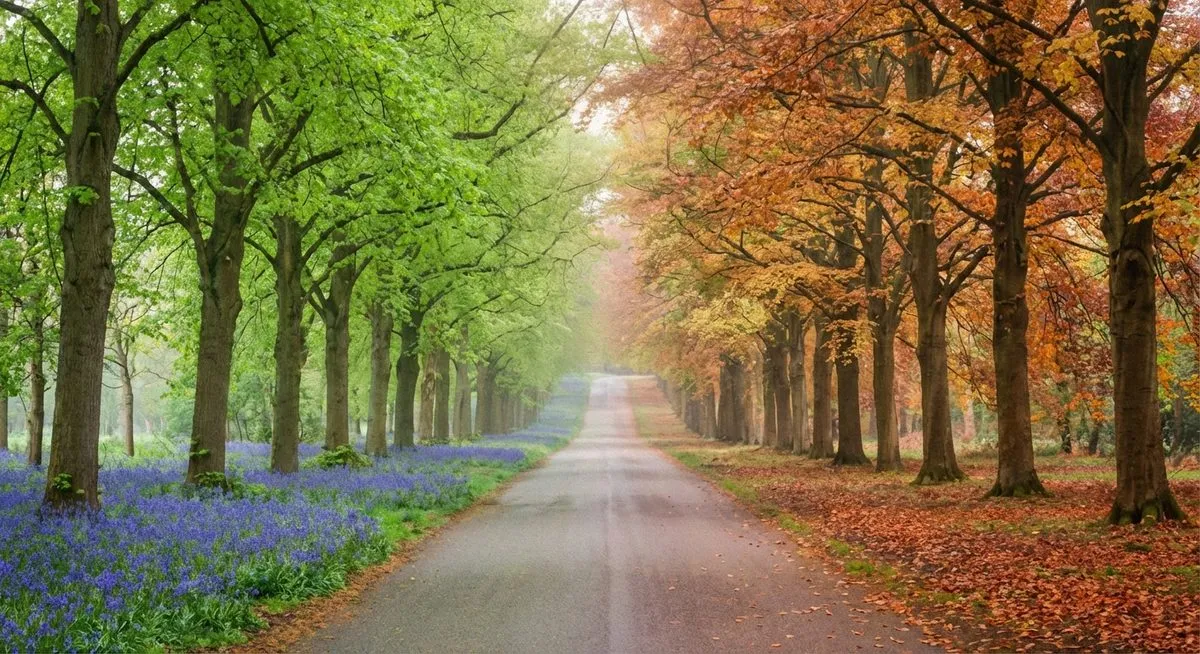
The same path through your grounds tells a completely different story in March than it does in October. The woodland that carpets itself in bluebells for three weeks in spring becomes a tunnel of copper and gold in autumn and a skeletal, frost-lined corridor in January. Each version is worth seeing. And that is why seasonal content is the most powerful return-visit driver a country estate can offer.
Why Guests Come Back
Most guests who enjoy a stay do not rebook. Nothing went wrong; there is simply nothing pulling them back. The stay was lovely, the room was comfortable, and they have a hundred other places they could try next.
Seasonal content turns that shrug into a date in the diary. When a guest knows that the estate they visited in July looks completely different in November, and that there are new stories, new walks, and new things to discover, they have a concrete reason to rebook. Not a vague "we should go back sometime," but a specific "I want to see the autumn colour walk."
Most people who return to a place do not come back because "lovely stay" stuck with them; they come back because something specific pulled them. The properties that capture that repeat business are the ones that give guests a reason to come back for something new, and nothing renews an estate's appeal like the turning of a season.
Four Seasons, Four Different Estates
Spring (March – May)
Spring is transformation. The grounds wake up, and the change is visible week by week. Stories worth telling:
- The bluebell walk: where to find them, when they peak, why they grow in this particular woodland
- The kitchen garden coming to life: what is being planted, what survived the winter
- Nesting birds: where to look, what to listen for, which species return year after year
- The first blossoms: magnolia, cherry, wisteria. Each has a window of only days
Summer (June – August)
Summer is abundance. The borders are full, the meadows are buzzing, the evenings stretch long enough for a walk after dinner. Stories worth telling:
- The wildflower meadow: what grows here and why it was left uncut
- The herb garden in full scent: what the kitchen uses, what the bees prefer
- Evening walks: the spots where the light is best at 8pm, the bench with the sunset view
- Swimming, if your estate has it: the history of the lake, the lido, the river pool
Autumn (September – November)
Autumn is theatre. The landscape puts on its most dramatic show, and it changes daily. Stories worth telling:
- The colour walk: which trees turn first, where the best canopy is, the avenue that glows amber for two weeks
- Harvest: the apple pressing, the grape picking, the pumpkins in the kitchen garden
- Fungi: the woodland floor comes alive in October. A guided fungi note adds intrigue to any woodland walk
- Migration: which birds leave, which arrive, what to listen for on a November morning
Winter (December – February)
Winter is often the most overlooked season on estates, but it has its own quiet beauty. Stories worth telling:
- Frost walks: the ha-ha rimmed in white, the cobwebs jewelled with ice on the gate
- Winter wildlife: deer come closer when the visitors thin out, robins hold territory, owls hunt at dusk
- The bones of the garden: without leaves, the structure of the landscape reveals itself. The avenue, the walls, the bones of the original design
- Fireside context: for cold days when guests stay indoors, a story about the house itself, the hearth, the history of the room they are sitting in
A property that tells the same stories year-round is a property that gives guests one reason to visit. A property that changes with the seasons gives them four.
How Seasonal Content Works in Practice
With a story map, seasonal updates are instant. There is no reprinting, no app update, no logistics. You change the content on the server, and the next guest who opens the map sees the new version.
This means you can:
- Swap entire walking routes: a spring bluebell walk becomes an autumn colour walk in October
- Update individual stories: the kitchen garden story changes to reflect what is growing right now
- Add time-limited highlights: "The magnolia by the south wall is in bloom this week", and remove them when they pass
- Adjust for weather and conditions: close a muddy path, open an alternative, add a note about wellies
The operational overhead is minimal. A quick update every few weeks keeps the map feeling alive and current, which is exactly what guests want.
The Marketing Angle
Seasonal content doubles as a marketing tool. When your map changes with the seasons, you have a reason to reach out to past guests:
- "The bluebells are about to peak. Book now for the spring walk"
- "Our autumn colour walk is live: five new stories along the ridge"
- "Winter wildlife trail now open. See the estate at its quietest"
Each seasonal update is a reason to email, a reason to post, and a reason for a guest to think "I should go back." Compare this with a property that has nothing new to say between one year and the next.
What Guests Actually Say
The reviews that mention seasons are some of the most powerful a property can receive. They signal depth, care, and a connection to the landscape that goes beyond the cosmetic:
- "We came in summer and loved it, but the autumn version of the walk was even better."
- "The map told us the bluebells would be out this week, and they were spectacular."
- "We're already planning a winter visit to see the deer."
These are not reviews about rooms or food. They are reviews about a relationship with a place, one that deepens with each return.
Getting Started
You do not need to build four entirely different maps. Start with what changes most visibly on your grounds each season, and update those stories. A few swaps in spring and autumn can be enough to make the experience feel fresh.
The guests who visited last year are looking for a reason to come back. Give them a season they have not seen yet.