
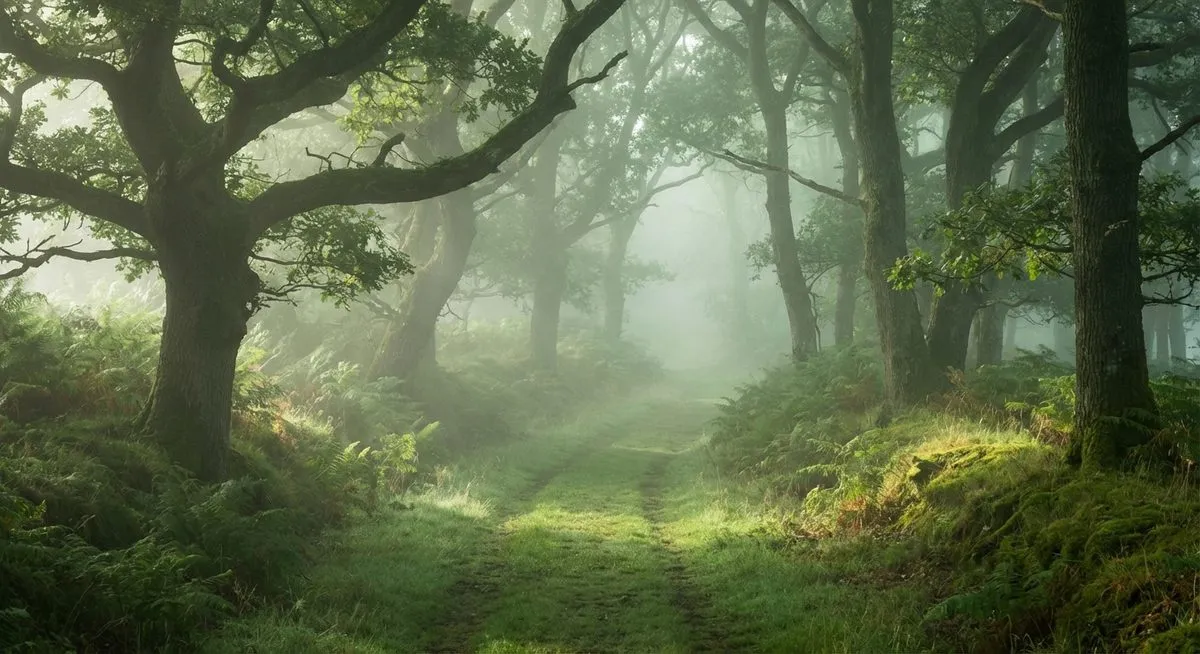
It is one of the first questions estate owners ask, and a fair one: "Half my grounds have one bar of signal, if that. Will a map on a phone even work out there?" The short answer is yes, more reliably than most people expect. But it helps to understand why, because the answer changes how you set it up.
The worry usually comes from mixing up two different things: the mobile signal and GPS. They are not the same, and only one of them has anything to do with knowing where a guest is standing.
GPS is not your mobile signal
The blue dot that shows a guest where they are does not come from your mobile network. It comes from satellites, the same ones a car sat-nav uses, and they pass over a Somerset valley just as they pass over a motorway. A phone can get a GPS fix with no bars at all, no WiFi, and no mobile data.
So the part everyone worries about, "will the map know where I am in the far corner of the woodland," is the part that works almost everywhere outdoors. Under a heavy tree canopy or right up against a tall stone wall the fix wanders a little, more on that below, but out in the open it is good to a handful of metres.
What the signal is actually for
If GPS handles location, what is the mobile signal for? One thing: loading the map in the first place. A story map is a web page, so the phone needs a connection to fetch it, along with the photographs, the text, and any audio, the moment a guest first opens it.
That is why the sensible place to start a guest is somewhere the signal is good: at reception, or on the guest WiFi. A QR code by the front desk is ideal. The guest scans it while they still have a bar or two, the map and its stories load, and from that point the hard part is already done.
What happens when the signal drops
Once the map has loaded, a well-built story map keeps its content on the phone rather than fetching it again from the network. A Bramble map caches the map and every story in the browser's own storage, so when a guest walks into a dead spot behind the hill, the screen does not go blank. The blue dot keeps moving on GPS, and the stories are already there, waiting.
In practice that means a guest can lose signal completely halfway round the grounds and never notice. The experience was loaded at the gate. The walk just plays it back.
How accurate is the blue dot, really?
Here we would rather be honest than oversell. Out in the open, a modern phone places a guest within a few metres, close enough that the right story unlocks as they reach the right spot. Two things degrade it: dense tree canopy, which blocks the satellites' line of sight, and tall walls or buildings, which bounce the signal around. In those places the dot can drift by ten or twenty metres before it settles.
Rather than pretend to a precision it does not have, a Bramble map shows the accuracy honestly, with a soft circle around the dot indicating how sure the phone is. And stories are triggered by getting near a spot, not by landing on an exact pixel, so a little drift does not stop the walled garden's story from appearing when a guest reaches the walled garden.
Setting it up so it just works
None of this needs a perfect estate. It needs a little thought at the start:
- Load it where the signal is. Put the QR code at reception, on welcome cards, and on the guest WiFi landing page, so the map loads before guests head out.
- Be generous with trigger areas in tricky spots. For stories under heavy canopy or beside big walls, a slightly wider trigger radius absorbs the GPS drift.
- Walk it yourself. The best test is the real one: load the map, walk the route with a phone in your hand, and note anywhere the dot behaves oddly. It is quick, and it tells you everything.
- Keep a few paper maps for the rare case. If a guest somehow reaches a far gate with no signal and a cold cache, a printed backup costs nothing. In practice it is rarely needed.
You do not need five bars across five hundred acres. You need the map to load once, somewhere with a signal, and sensible setup after that. GPS handles the rest, and it does not care how remote you are.
The honest summary
A browser-based guest map is arguably better suited to a remote estate than to a city, because the thing that fails in the countryside, mobile data, is the thing it needs least. Location comes from the sky. The content travels with the guest. As long as the map loads before the walk begins, the dead spots on your grounds stop being a problem and start being part of the adventure.